
- 1. How to Calculate Ratio Utility Billing System (RUBS)
-
2.
What Is RUBS?
- 2.1. Learn More About This Topic:
- 2.2. Why does RUBS matter for older buildings?
- 2.3. How is RUBS calculated?
- 2.4. What is an example of a RUBS calculation?
- 2.5. RUBS vs. submetering: what is the difference?
- 2.6. What should owners know about RUBS compliance?
- 2.7. When does RUBS make sense?
- 2.8. When might RUBS not be the right fit?
- 2.9. What should owners do before implementing RUBS?
- 2.10. How Beach Front Property Management can help
- 2.11. Final thoughts
How to Calculate Ratio Utility Billing System (RUBS)
Utility costs can be one of the most difficult expenses for multifamily owners to control.
For newer apartment buildings, this is often easier because many are built with individual utility tracking or submetering already included. But for older or slightly older multifamily properties, utility tracking may not be built into the property.
That is where a Ratio Utility Billing System, often called RUBS, can help.
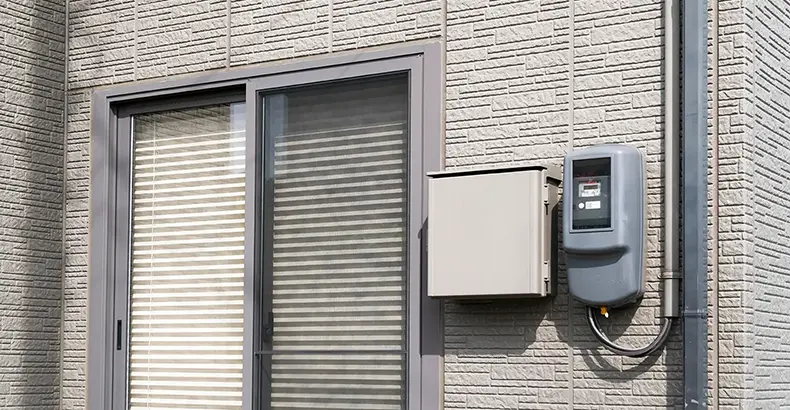
RUBS is a method used to divide a master utility bill among residents using a set formula instead of individual meter readings. It is commonly used when a property does not have separate meters or when installing submeters is too costly or difficult.
What Is RUBS?
RUBS stands for Ratio Utility Billing System.
It is a utility billing method that divides a master utility bill among residents based on an allocation formula. Instead of billing each unit based on exact usage, RUBS estimates each unit’s share of the total bill.
Common RUBS factors include:
- unit square footage
- number of occupants
- number of bedrooms
- number of bathrooms
- number of plumbing fixtures
- a blended formula using more than one factor
For example, a larger two-bedroom unit with more occupants may receive a larger share of the water bill than a smaller studio.
The main point is simple: RUBS does not measure actual usage. It allocates shared costs based on a formula.
Learn More About This Topic:
Why does RUBS matter for older buildings?
Newer apartment communities often include utility tracking, submeters, or more efficient building systems from the start. Because of that, they may not need RUBS.
Older buildings often have a different problem. They may have one water meter, one gas meter, or shared trash service for the entire property. If the owner pays the full bill without any recovery system, rising utility costs can reduce cash flow.
For owners of older or slightly older multifamily buildings, RUBS may help:
- recover rising utility expenses
- create a clearer cost allocation process
- support repairs and property updates
- improve expense control
- encourage residents to be more mindful of utility use
- protect net operating income
This is especially important when utility costs are increasing and the property also needs plumbing, water conservation, or common-area improvements.
How is RUBS calculated?
There is no single universal RUBS formula. The formula depends on the property, the utility type, and the allocation method.
A basic formula may look like this:
Total Utility Bill × Resident Allocation Percentage = Resident Utility Charge
For example, if a property’s water bill is $3,000 and one unit is responsible for 6% of the allocation:
$3,000 × 6% = $180
That resident would be charged $180 for that billing cycle.
Some properties use a blended formula. For example:
- 50% based on occupancy
- 50% based on square footage
This can make the allocation feel more balanced than using only one factor.
What is an example of a RUBS calculation?
Let’s say a 10-unit building has a monthly water bill of $3,000.
The owner uses a blended RUBS formula:
- 50% based on square footage
- 50% based on occupancy
If Unit A represents:
- 6% of total building square footage
- 8% of total building occupancy
Then the calculation would be:
Square footage share:
$1,500 × 6% = $90
Occupancy share:
$1,500 × 8% = $120
Total resident charge:
$90 + $120 = $210
In this example, Unit A would be billed $210 for that month.
This is why clear documentation matters. Residents should be able to understand how the charge was calculated.
RUBS vs. submetering: what is the difference?
RUBS and submetering are not the same.
Submetering tracks actual utility usage for each unit. RUBS estimates each unit’s share of the total bill using a formula.
Submetering is usually more precise, but it can be expensive to install in older buildings. RUBS may be more practical when a property was not built with individual utility tracking and retrofitting meters would be difficult or costly.
That said, RUBS is receiving more attention from regulators and tenant advocates because tenants may not always have access to the information needed to verify whether the charge is accurate.
For owners, the takeaway is simple: RUBS should be transparent, documented, and reviewed before implementation.
What should owners know about RUBS compliance?
RUBS is not something owners should add casually.
Before implementing RUBS, owners should review:
- lease language
- local rent control rules
- utility billing laws
- notice requirements
- disclosure requirements
- whether the property is master-metered
- whether the charge could be treated as rent
This is especially important in Los Angeles. In late 2025 and early 2026, the Los Angeles Housing Department and City Council materials discussed additional limits and possible restrictions on RUBS and other unmetered utility billing practices, especially in rent-controlled housing.
Because local rules can change, owners should confirm the current requirements before changing how residents are billed.
When does RUBS make sense?
RUBS may make sense when:
- the property has master-metered utilities
- individual submetering is not already installed
- the building is older or slightly older
- utility costs are rising
- lease language allows utility allocation
- local rules permit the billing method
- the formula can be explained clearly
For the right property, RUBS can help owners recover costs that would otherwise reduce operating income.
That recovered income may help support:
- plumbing repairs
- water conservation upgrades
- common-area improvements
- building system updates
- preventive maintenance
- long-term property preservation
The goal is not just to pass costs through. The goal is to create a fair, documented process that helps the property operate more sustainably.
When might RUBS not be the right fit?
RUBS may not be the right fit when:
the building already has accurate submeters
- local law restricts RUBS billing
- lease language does not allow utility pass-throughs
- residents were not properly notified
- the formula is unclear
- the property is subject to strict rent control rules
In those cases, owners may need to consider other options, such as submetering, conservation upgrades, or adjusting operating strategy.
A poor RUBS rollout can create confusion, resident disputes, and compliance risk.
What should owners do before implementing RUBS?
Owners should slow down and review the property carefully.
A few practical steps include:
- review current utility bills
- identify which utilities are master-metered
- confirm lease language
- review local rent control requirements
- create a clear allocation formula
- document resident communication
- confirm whether administrative fees are allowed
- coordinate with legal or compliance guidance when needed
The goal is to avoid surprises. A RUBS program should be clear before the first bill is sent.
How Beach Front Property Management can help
Utility billing is not just an accounting issue. It affects resident communication, compliance, operations, and long-term property performance.
At Beachfront Property Management, we help multifamily owners review whether RUBS makes sense for their property.
That includes support with:
- utility cost review
- RUBS formula evaluation
- lease and disclosure coordination
- resident communication workflows
- compliance review
- property-level operational planning
For older or slightly older buildings without individual utility tracking, RUBS may be one way to recover utility costs and support needed repairs or updates.
Final thoughts
RUBS can be a useful tool for multifamily owners, especially for older buildings that were not built with individual utility tracking.
It can help recover rising utility costs and support property repairs, updates, and long-term operations. But it must be handled carefully. The formula should be clear, the lease language should be reviewed, and local rules must be followed.
For owners, the safest next step is to review each property individually instead of assuming RUBS is right for every building.