
- 1. What Is a Tax Credit Apartment?
- 2. What Is the Low-Income Housing Tax Credit (LIHTC)?
- 3. 4% vs. 9% Tax Credits
- 4. What Is a Tax Credit Apartment?
- 5. Who Qualifies for a Tax Credit Apartment?
- 6. How Rent Is Calculated
- 7. How the LIHTC Program Works Step by Step
- 8. Annual Recertifications
- 9. Compliance Requirements in California
- 10. LIHTC vs. Section 8
- 11. Why Tax Credit Housing Matters in California
- 12. Challenges of Managing Tax Credit Properties
- 13. Why BFPM Is a Leader in Affordable Housing Management
What Is a Tax Credit Apartment?
A tax credit apartment is an affordable housing unit created under the federal Low-Income Housing Tax Credit (LIHTC) program. The LIHTC program was created by the Tax Reform Act of 1986 and remains the primary federal tool for financing affordable rental housing in the United States. Developers receive tax credits, usually by selling them to investors to raise equity, and in return the property must comply with long-term affordability restrictions.
These properties provide below-market rents for income-qualified households, but they are not the same as Section 8 voucher housing.
What Is the Low-Income Housing Tax Credit (LIHTC)?
At a high level, the LIHTC program works like this:
- The federal government allocates housing credits to each state.
- State housing agencies award those credits to qualifying projects.
- Developers sell the credits to investors to raise capital.
- In return, the property must rent restricted units at affordable rates and comply with Section 42 rules.
- Investors generally claim the credits over a 10-year credit period.
Even though the credits are claimed over 10 years, the compliance commitment is longer. The federal compliance period is generally at least 15 years, and California projects commonly have extended use periods of 30 years or more under recorded agreements.
4% vs. 9% Tax Credits
There are two primary LIHTC structures.
9% Credits
9% credits are generally used for new construction or substantial rehabilitation without tax-exempt bond financing. They are highly competitive and usually generate more equity per dollar of eligible basis.
4% Credits
4% credits are generally paired with tax-exempt bond financing and are often used for acquisition/rehab and preservation deals. They are less competitive in structure than 9% credits but usually generate less equity.
In California, both federal and state housing tax credit programs are administered by the California Tax Credit Allocation Committee (CTCAC).
What Is a Tax Credit Apartment?
A tax credit apartment is a rental unit inside a LIHTC property. These units:
- Have income restrictions
- Have rent restrictions tied to Area Median Income (AMI)
- Must comply with detailed federal and state rules
- Are subject to file reviews, inspections, and ongoing compliance monitoring
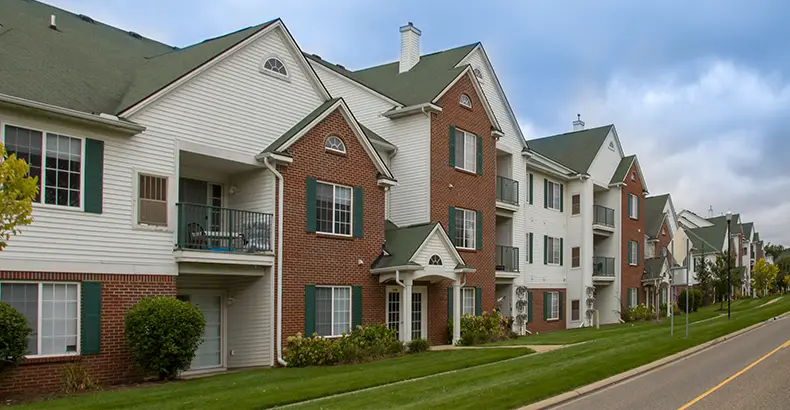
They are not the same as conventional market-rate apartments, even if the building looks similar from the outside.
Who Qualifies for a Tax Credit Apartment?
Eligibility is based on household income relative to local Area Median Income.
Common minimum set-aside structures under Section 42 include:
- 20% of units at 50% AMI
- 40% of units at 60% AMI
- Income averaging, where the property average cannot exceed 60% AMI and some designated units may go as high as 80% AMI, subject to the project’s election and compliance rules.
HUD publishes income limits annually, and those limits vary by metro area and household size. For 2026, HUD delayed the release of FY 2026 income limits to May 1, 2026, due to delayed Census data.
How Rent Is Calculated
LIHTC rent is not based on the tenant’s actual current income after move-in. Instead, rent is generally based on the unit’s designated AMI level and the applicable household size assumptions under LIHTC rules.
In simple terms:
- A 60% AMI unit is priced using the 60% AMI rent limit for that area.
- The rent cap is generally tied to an affordability formula based on a share of imputed income, not the tenant’s actual paycheck after move-in.
This is one of the major differences between LIHTC and Section 8.
How the LIHTC Program Works Step by Step
1. Federal Allocation
The IRS allocates housing credits to each state.
2. State Distribution
In California, CTCAC awards credits to qualifying projects.
3. Developer Application
Developers submit project proposals that typically address:
- Unit mix
- Affordability levels
- Financing structure
- Community impact
4. Equity Raise
Developers typically syndicate or sell the tax credits to investors to raise capital.
5. 10-Year Credit Period
Investors generally claim the credits annually over 10 years.
6. 15-Year Compliance Plus Extended Use
The federal compliance period is generally 15 years, and California projects frequently remain restricted much longer through extended use agreements.
Annual Recertifications
This is an area where people often get confused.
For many 100% LIHTC properties, annual income recertification is no longer required after move-in under federal LIHTC rules. However, mixed-finance properties or properties layered with HUD or other subsidy programs may still require annual recertifications or other ongoing reporting. California also maintains its own compliance and monitoring requirements through CTCAC.
That means the answer depends on how the property is financed and regulated.
Compliance Requirements in California
LIHTC properties in California are regulated through:
- IRS Section 42 requirements
- CTCAC oversight
- Regulatory agreements
- Extended use agreements
Owners and managers generally must:
- Verify income at move-in
- Track rent limits and utility allowances
- Maintain student rule compliance
- Keep tenant files audit-ready
- Submit required compliance reports
- Prepare for inspections and audits
Noncompliance can trigger IRS Form 8823 reporting and create risk for the ownership structure and investor credits.
LIHTC vs. Section 8
LIHTC
- Rent is restricted by LIHTC rent limits
- No voucher is required
- Tenant eligibility is verified at move-in
- Rent does not automatically float up and down with every income change after move-in in the way voucher programs do
Section 8
- The tenant typically uses a voucher
- Rent responsibility is based on tenant income and subsidy rules
- Government generally pays a portion of the rent directly
- Annual recertification is standard in voucher programs
Some affordable housing communities’ layer both programs together.
Why Tax Credit Housing Matters in California
California continues to face severe housing affordability pressure, and LIHTC developments remain one of the main ways affordable rental housings get built or preserved. CTCAC administers both federal and state tax credit programs specifically to promote affordable rental housing for lower-income Californians.
In markets like Los Angeles, Long Beach, and Orange County, tax credit housing plays a major role in workforce housing, senior housing, and long-term affordability planning.
Challenges of Managing Tax Credit Properties
LIHTC management is more specialized than conventional apartment management.
Common challenges include:
- Strict move-in income certification
- Rent and utility allowance tracking
- Student eligibility rules
- File management and audit readiness
- State reporting requirements
- Physical inspections and compliance reviews
Operational mistakes can create serious compliance problems.
Why BFPM Is a Leader in Affordable Housing Management
Beach Front Property Management has extensive experience managing affordable housing communities, including LIHTC-regulated properties across Southern California.
Our team helps support:
- Accurate move-in certifications
- Rent and utility allowance tracking
- Audit readiness
- Ongoing compliance monitoring
- Regulatory reporting
- Long-term property performance
Affordable housing is not conventional property management. It requires specialized systems, documentation, and oversight.
The Bottom Line
A tax credit apartment is part of a federally supported affordable housing system that helps expand access to quality rental housing. Developers benefit from tax credit equity, tenants benefit from restricted rents, and communities benefit from long-term affordability.
But LIHTC compliance is highly technical. California owners and managers must understand move-in certification, rent limits, utility allowances, student rules, state monitoring, and long-term regulatory agreements.
Beach Front Property Management helps affordable housing owners across Southern California manage LIHTC communities with the specialized systems and oversight these properties require.
If you want, I can do the next blog in this same format.